

 ·
4 minute read
·
4 minute read
Public procurement is changing rapidly. Between evolving procurement legislation, increasing expectations around transparency, digital transformation, and growing scrutiny of public spending, training is no longer simply about meeting compliance requirements, it's about building confident, capable procurement professionals who can deliver better outcomes for citizens.
Whether you're responsible for procurement in a local authority, central government department, NHS organisation, housing association, or wider public body, choosing the right public sector procurement training provider can have a significant impact on both compliance and organisational performance.
This guide explains what procurement teams should look for in 2026, the questions to ask potential providers, and how to choose training that delivers lasting value.

Contents
- Why Public Procurement Training Matters More Than Ever
- What Is Public Sector Procurement Training?
- How to Choose a Procurement Training Provider
- Public Sector Expertise
- Up-to-Date Legislative Knowledge
- Practical, Scenario-Based Learning
- Flexible Delivery Formats
- Training for Different Experience Levels
- Should You Choose Accredited Procurement Certification?
- Why Government Contract Management Skills Matter
- Questions to Ask Before Choosing a Training Provider
- Common Mistakes to Avoid
- What Does Good Public Sector Compliance Training Look Like?
- Why Ongoing Government Procurement Education Matters
- How ModernGov Supports Public Sector Procurement Professionals
- Frequently Asked Questions
- Enquire About Training with ModernGov
Why Public Procurement Training Matters More Than Ever
Public procurement has entered a new era.
The implementation of new procurement legislation, greater emphasis on social value, sustainability objectives, supplier engagement, and contract management means procurement professionals are expected to possess a broader skillset than ever before.
Modern procurement teams must balance:
- Regulatory compliance
- Strategic procurement planning
- Effective supplier relationships
- Commercial awareness
- Risk management
- Ethical decision-making
- Value for money
- Contract performance management
Training therefore needs to go beyond explaining regulations, it should help teams apply procurement principles confidently in real-world scenarios.
What Is Public Sector Procurement Training?
Public sector procurement training provides the knowledge and practical skills required to buy goods, services and works in accordance with UK public procurement rules and best practice.
Training typically covers:
- Procurement legislation and compliance
- Tendering procedures
- Evaluation methodologies
- Procurement planning
- Contract award processes
- Supplier management
- Governance and audit requirements
- Commercial negotiation
- Contract management
- Social value considerations
Many organisations also combine procurement learning with broader public administration training, helping officers understand governance, accountability and decision-making across the public sector.
How to Choose a Procurement Training Provider
Not all procurement training is designed for the realities of the public sector.
When evaluating providers, consider the following criteria.
1. Public Sector Expertise
The best providers understand how procurement works within government, not just procurement theory.
Look for trainers who have practical experience supporting:
- Local authorities
- Combined authorities
- Central government
- NHS organisations
- Housing providers
- Education institutions
Public procurement involves governance processes that differ significantly from private sector purchasing.
2. Up-to-Date Legislative Knowledge
Procurement regulations continue to evolve.
Training should reflect:
- Current procurement legislation
- Cabinet Office guidance
- Best practice in transparency
- Procurement governance
- Emerging policy developments
Outdated training can leave organisations exposed to compliance risks.
3. Practical, Scenario-Based Learning
The most effective learning helps delegates apply knowledge immediately.
Look for programmes that include:
- Real procurement case studies
- Interactive workshops
- Tender evaluation exercises
- Contract management scenarios
- Governance discussions
- Practical templates and resources
This approach improves confidence far more effectively than lecture-based delivery alone.
4. Flexible Delivery Formats
Public organisations increasingly require learning that fits around operational demands.
Many providers now offer:
- Virtual instructor-led training
- Face-to-face workshops
- Hybrid programmes
- Self-paced online learning
- Bespoke in-house delivery
The right format depends on your team's size, experience levels and learning objectives.
5. Training That Supports Different Experience Levels
Procurement teams rarely have identical training needs.
An effective provider should offer learning suitable for:
- New procurement officers
- Contract managers
- Commissioning teams
- Procurement specialists
- Senior managers
- Governance professionals
- Executive decision-makers
This creates a consistent understanding across the organisation.
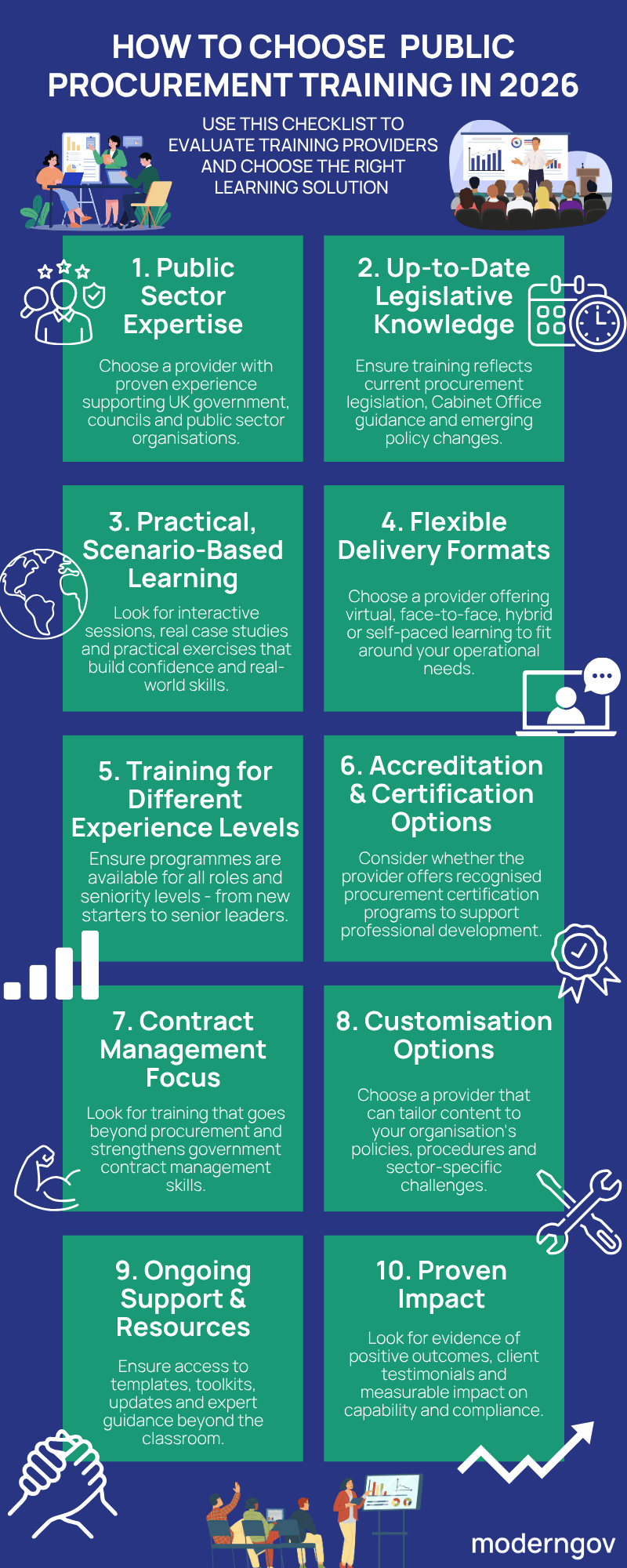
Should You Choose Accredited Procurement Certification?
Many organisations look for procurement certification programs to demonstrate professional development.
Accredited learning can provide:
- Structured career progression
- Recognised qualifications
- Consistent professional standards
- Increased staff confidence
- Improved recruitment and retention
However, certification should complement practical application rather than replace it.
The strongest programmes combine recognised learning with real operational experience.
Why Government Contract Management Skills Matter
Procurement doesn't end once the contract is awarded.
Increasingly, organisations recognise that effective government contract management delivers greater long-term value than focusing solely on the procurement process.
Training should therefore include:
- Performance monitoring
- Supplier relationship management
- KPI development
- Managing contract variations
- Risk management
- Dispute resolution
- Benefits realisation
Strong contract management helps organisations maximise value while maintaining compliance throughout the contract lifecycle.
Questions to Ask Before Choosing a Training Provider
Before selecting a provider, ask:
- Is the content designed specifically for UK public sector procurement?
- Is the material regularly updated to reflect legislative changes?
- Are trainers experienced public sector practitioners?
- Can programmes be tailored to our organisation?
- Are multiple delivery methods available?
- Does the provider support ongoing learning after the course?
- Can training be aligned to organisational objectives rather than generic compliance?
These questions help identify providers that deliver genuine organisational value rather than one-off training sessions.
Common Mistakes to Avoid
Many organisations invest in training but fail to achieve lasting improvements.
Common pitfalls include:
Choosing on price alone
Low-cost training can become expensive if delegates leave without practical skills.
Focusing only on compliance
Compliance is essential, but procurement teams also need commercial capability, confidence and strategic thinking.
One-size-fits-all learning
Different roles require different competencies. Tailored programmes are often more effective than generic courses.
Treating training as a one-off event
Continuous professional development supports better long-term procurement performance.
What Does Good Public Sector Compliance Training Look Like?
Effective public sector compliance training should be:
- Practical rather than theoretical
- Regularly updated
- Relevant to current legislation
- Interactive and engaging
- Delivered by experienced practitioners
- Focused on improving organisational capability
It should also encourage learners to think critically about governance, accountability and delivering value for the communities they serve.
Why Ongoing Government Procurement Education Matters
Procurement is becoming increasingly strategic.
As public expectations continue to rise, organisations benefit from investing in continuous government procurement education that develops both technical knowledge and leadership capability.
Regular learning helps teams:
- Stay compliant with changing regulations
- Improve procurement efficiency
- Strengthen governance
- Reduce procurement risk
- Improve supplier relationships
- Deliver greater public value
Rather than reacting to legislative changes, organisations that prioritise learning are better positioned to adapt confidently.
How ModernGov Supports Public Sector Procurement Professionals
At ModernGov, we believe effective procurement training should do more than explain legislation, it should empower public sector professionals to make informed decisions with confidence.
Our learning programmes are designed specifically for UK public sector organisations and combine current regulatory knowledge with practical application. Through interactive workshops, experienced trainers and sector-specific expertise, we help procurement, governance and leadership teams strengthen compliance while building the skills needed to deliver better outcomes.
Whether you're developing new procurement officers, supporting experienced contract managers or strengthening organisational capability, investing in high-quality training helps create more resilient, confident procurement teams.
Frequently Asked Questions
What is public sector procurement training?
Public sector procurement training equips professionals with the knowledge and practical skills needed to buy goods and services lawfully, transparently and effectively within UK public sector organisations.
Who should attend procurement training?
Procurement officers, contract managers, commissioners, governance professionals, finance teams, project managers and senior decision-makers all benefit from procurement training.
Is procurement certification necessary?
Certification can support career development and demonstrate professional competence, but organisations should also prioritise practical learning that reflects day-to-day procurement challenges.
How often should procurement teams complete training?
Refresher training should be completed whenever legislation changes, alongside regular professional development to keep knowledge and skills current.
What should I look for in a procurement training provider?
Look for providers with genuine public sector expertise, up-to-date legislative knowledge, practical delivery methods, flexible learning options and experience supporting UK government and council organisations.


-Jan-25-2024-12-32-42-4579-PM.jpg)