
 ·
8 minute read
Organisational change is a constant feature of public sector life. From policy reforms and restructuring to digital transformation, budget pressures and new ways of working, teams are regularly expected to adapt while continuing to deliver essential services.
But what happens when change becomes relentless?
When employees are repeatedly asked to adjust to new priorities, processes or leadership expectations, enthusiasm can give way to frustration, uncertainty and disengagement. This is known as change fatigue, and it can make even well-intentioned initiatives harder to implement successfully.
For public sector managers, the challenge is not simply to communicate the next change. It is to help people understand why it matters, feel involved in the process and maintain the capacity to adapt.
So, how can managers tackle change fatigue and keep teams engaged when change shows no sign of slowing down?

What is change fatigue?
Change fatigue occurs when employees become mentally and emotionally exhausted by repeated organisational changes, particularly when they feel overwhelmed, poorly informed or unable to influence what happens.
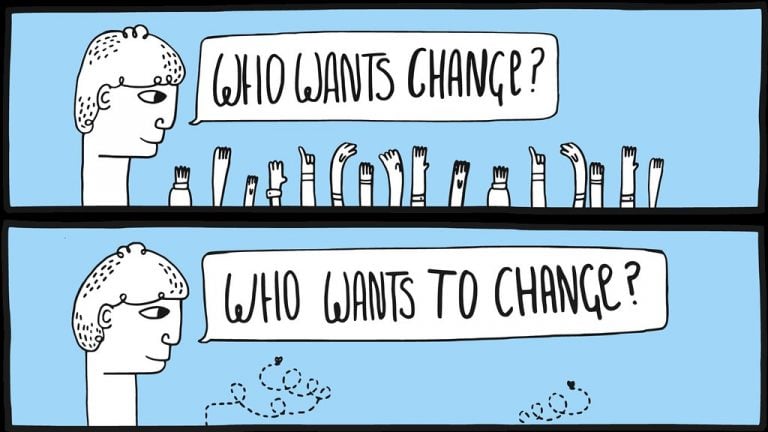
It is not necessarily resistance to change itself. Employees may understand why an organisation needs to evolve but struggle with the cumulative impact of adapting to one initiative after another.
In public sector organisations, this can be particularly challenging. Managers may need to implement new policies, introduce technology, respond to funding constraints and reorganise services, often while working with limited resources and competing priorities.
When change is poorly managed, employees can begin to question whether new initiatives will last, whether their concerns will be heard and whether the additional effort will lead to meaningful improvements.
Over time, this can affect morale, productivity, collaboration and trust in leadership.
Why is change fatigue a challenge for the public sector?
Change fatigue is not simply a question of employee morale. It can influence how effectively public services adapt, improve and respond to the needs of the people they serve.
Several pressures can make managing change particularly demanding across central government, local authorities, the NHS and other public sector organisations.
1. Constantly shifting priorities
Policy developments, changing public expectations and organisational restructuring can require teams to adjust their focus repeatedly.
When priorities change before previous initiatives have been embedded, employees may struggle to understand what matters most. Work can be duplicated, deadlines can slip and confidence in new projects can diminish.
2. Limited time and resources
Many public sector teams must deliver services alongside transformation programmes, efficiency targets and new administrative demands.
If change is introduced without sufficient time, training or support, employees may experience it as another responsibility rather than an opportunity to improve how they work.
3. Uncertainty about the future
Restructuring, new technologies and changes to roles or responsibilities can create uncertainty about job security, career development and the future direction of an organisation.
Even when decisions have not been finalised, a lack of clear communication can allow rumours and anxiety to spread.
4. A disconnect between leadership and frontline teams
Senior leaders may see the strategic benefits of a change, while employees experience the practical consequences of implementing it.
Without opportunities for staff to share feedback, leaders risk overlooking operational challenges, workload pressures and the unintended consequences of new processes.
The key takeaway: change fatigue often develops when the pace and volume of change exceed the support, communication and capacity available to employees.
What does the evidence tell us about change and employee engagement?
The relationship between leadership, change management and employee engagement is particularly relevant to public sector managers.
The UK Civil Service People Survey 2025 reported an employee engagement index of 65%, up one percentage point from 2024. However, the survey also found that the learning and development theme recorded the largest decrease among its summary themes, falling by two percentage points.
The survey's methodology identifies leadership and managing change as the strongest driver of employee engagement in the Civil Service, followed by employees' experience of their work and their line manager.
These findings highlight an important point: engagement is influenced not only by the work people do, but also by how change is led and how supported employees feel during the process.
Source: Civil Service People Survey 2025 — results highlights.
Separately, the Chartered Institute of Personnel and Development (CIPD), in its September 2025 analysis of the public sector workforce, highlighted the importance of leadership and people management in improving motivation, productivity, retention and wellbeing.
Together, this evidence reinforces the value of developing managers who can communicate clearly, support their teams and navigate change effectively.
7 ways public sector managers can tackle change fatigue
Managers cannot always control the amount of change an organisation faces. However, they can influence how it is introduced, understood and experienced by their teams.
Here are seven practical change management strategies to help maintain employee engagement.
1. Explain the reason behind every change
Employees are more likely to engage with change when they understand why it is happening and what it is intended to achieve.
Simply announcing a new process or initiative is rarely enough. Managers should explain the problem being addressed, the benefits expected and how the change connects to wider organisational objectives.
Where appropriate, make the implications tangible for employees and the communities they serve.
For example, when introducing a new digital system, explain how it could reduce duplication, improve access to information or free up time for higher-value work. Acknowledge any short-term disruption involved in achieving those benefits.
If the rationale is uncertain or still developing, be honest about that too.
Practical tip: prepare a short explanation covering three questions: Why is this change needed? What will it mean for our team? How will we know whether it has worked?
2. Recognise the impact of previous changes
One of the most common mistakes in change management is treating each new initiative as a separate event.
For employees, however, change is cumulative. A new system might follow a restructure, which might follow a change in leadership or a period of increased workload.
Before launching another initiative, managers should consider what their teams have already experienced.
Ask questions such as:
- How much change has the team managed recently?
- Which previous initiatives are still being embedded?
- What additional pressures are employees facing?
- What support or recovery time might be needed?
Recognising previous efforts demonstrates that leaders understand the reality of employees' working lives.
It can also help identify whether a proposed initiative needs to be phased, simplified or delayed.
3. Involve employees in the process
People are more likely to engage with change when they have a meaningful opportunity to contribute.
Consultation should go beyond informing employees of decisions that have already been made. Where there is scope to influence the approach, involve staff in identifying challenges, shaping solutions and testing new ways of working.
For public sector managers, this could mean holding team workshops, gathering feedback from frontline employees or creating small working groups to explore the practical implications of a new process.
Employee involvement can reveal problems that might otherwise go unnoticed until implementation.
It also helps employees understand that their professional knowledge and experience remain valuable, even when familiar ways of working are changing.
Practical tip: be clear about what is open to influence and what has already been decided. This helps build trust and avoids creating expectations that cannot be met.
4. Communicate consistently, even when you do not have every answer
Uncertainty can be difficult to manage, particularly when employees are worried about their roles, workload or the future of their organisation.
Silence rarely removes that uncertainty. Instead, it can leave people to fill the gaps themselves.
Managers should establish a consistent communication rhythm throughout the change process. This might include short team updates, regular one-to-one conversations, written summaries and opportunities to ask questions.
Crucially, communication should be two-way.
Give employees space to raise concerns, challenge assumptions and explain how changes are affecting their work. Where answers are not yet available, acknowledge the uncertainty and explain when further information is expected.
Being transparent about what is known, what is still being decided and what happens next is more credible than offering reassurance that cannot be guaranteed.
5. Protect capacity and make realistic decisions about workload
Even the most compelling change programme can struggle if employees do not have the time or resources to implement it properly.
Managers should consider what can realistically be achieved alongside existing responsibilities. If a new initiative requires additional work, identify which other tasks can be paused, reduced, delegated or deprioritised.
This is particularly important in public sector teams where maintaining essential services must remain a priority.
Avoid assuming that employees can absorb every new responsibility through greater effort alone.
Where possible, break change into manageable stages, provide time to learn new processes and set realistic expectations for the transition period.
Ask yourself: if this initiative is a priority, what are we prepared to stop doing to make room for it?
That question can help turn change management from an additional demand into a more considered organisational decision.
6. Equip managers to lead people through uncertainty
Line managers play a crucial role in translating organisational decisions into everyday working practices.
However, managers are often expected to support employees through change while dealing with their own uncertainty, workload pressures and competing demands.
Without the right skills and support, they may struggle to address concerns, manage difficult conversations or maintain team motivation.
Organisations should therefore invest in leadership and management development that helps managers:
- Communicate change clearly and confidently.
- Listen actively and respond constructively to concerns.
- Recognise signs of stress, disengagement and declining morale.
- Manage resistance without dismissing legitimate concerns.
- Support collaboration and psychological safety.
- Build resilience and confidence during periods of uncertainty.
These skills help managers create a more supportive environment in which employees can raise issues early and work through challenges together.
Training should also be reinforced by senior leadership. Managers need clear messages, appropriate decision-making authority and access to support if they are to lead change effectively.
7. Recognise progress and make space for reflection
When change is continuous, teams can become focused on what comes next rather than what they have already achieved.
Recognising progress helps employees see that their efforts are making a difference.
This does not require elaborate reward schemes. Managers can acknowledge milestones in team meetings, share positive feedback from service users, highlight improvements in processes or recognise individuals who have helped colleagues adapt.
It is equally important to reflect on what has worked and what needs to improve.
After a significant change, ask employees what helped, what created unnecessary pressure and what should be done differently next time.
This creates opportunities to learn rather than simply moving from one initiative to another.
Celebrating progress should not mean overlooking ongoing difficulties. Recognition is most effective when it is specific, sincere and accompanied by a willingness to address the issues employees raise.
How can managers recognise the signs of change fatigue?
Change fatigue is not always obvious. Employees may continue completing their work while becoming less enthusiastic, less willing to contribute or increasingly sceptical about new initiatives.
Potential warning signs include:
- Declining engagement: employees participate less in meetings, workshops or change activities.
- Increased scepticism: staff question whether new initiatives will last or make a meaningful difference.
- Resistance to new processes: employees revert to familiar approaches or delay adopting new systems.
- Reduced collaboration: teams become less willing to share ideas, support colleagues or experiment.
- Growing workload concerns: employees report difficulty balancing transformation work with everyday responsibilities.
- Lower morale: uncertainty, frustration or disengagement becomes more apparent in conversations and feedback.
These signs should prompt curiosity rather than immediate criticism. Resistance may reflect genuine operational risks, insufficient training, unclear communication or unrealistic workloads.
Managers should avoid assuming that every concern is evidence of a negative attitude towards change.
Instead, use regular one-to-ones, team discussions, staff surveys and informal feedback to understand what is happening and what support is needed.
What should organisations do to prevent change fatigue in the long term?
Although line managers have an important role, preventing change fatigue cannot rest on individual managers alone.
Organisations need to consider how they plan, prioritise and deliver change across the wider workforce.
Three areas deserve particular attention.
Prioritise change initiatives. Review planned and ongoing programmes collectively to identify competing demands, duplication and initiatives that could be simplified or sequenced differently.
Build change management into leadership development. Equip managers at different levels with the skills to communicate change, involve employees and support teams through uncertainty.
Measure the employee experience. Monitor engagement, workload, wellbeing and feedback alongside project milestones. Successful implementation should consider not only whether a change has been delivered, but also whether employees can sustain the new way of working.
A change programme that meets its deadline but leaves teams exhausted, disengaged or poorly equipped may struggle to deliver its intended benefits over time.
Keeping teams engaged when change is constant
Change is an unavoidable part of public sector work. The challenge for managers is to ensure that continuous improvement does not come at the expense of employee engagement, wellbeing and trust.
By explaining the purpose of change, recognising its cumulative impact, involving employees, communicating consistently and protecting team capacity, managers can help make change more manageable.
Just as importantly, organisations must give managers the skills, resources and support to lead people through uncertainty.
The goal is not to eliminate change fatigue by asking employees to become more resilient. It is to create the conditions in which people can adapt, contribute and continue delivering effective public services without feeling overwhelmed by every new initiative.
Develop the skills to lead change with confidence
Effective change management starts with confident, capable leaders who can bring people with them.
ModernGov delivers tailored leadership and management training for public sector teams, helping managers strengthen their communication, navigate uncertainty, build team engagement and lead change more effectively.
Whether your organisation is implementing new technology, restructuring services or developing a more adaptable workforce, training can be tailored to your team's challenges and objectives.
Discover how tailored development can help your managers and teams navigate change with greater confidence.